

Art Trends Shaping Healthcare Design in 2026: Beyond the Traditional Healthcare Aesthetic
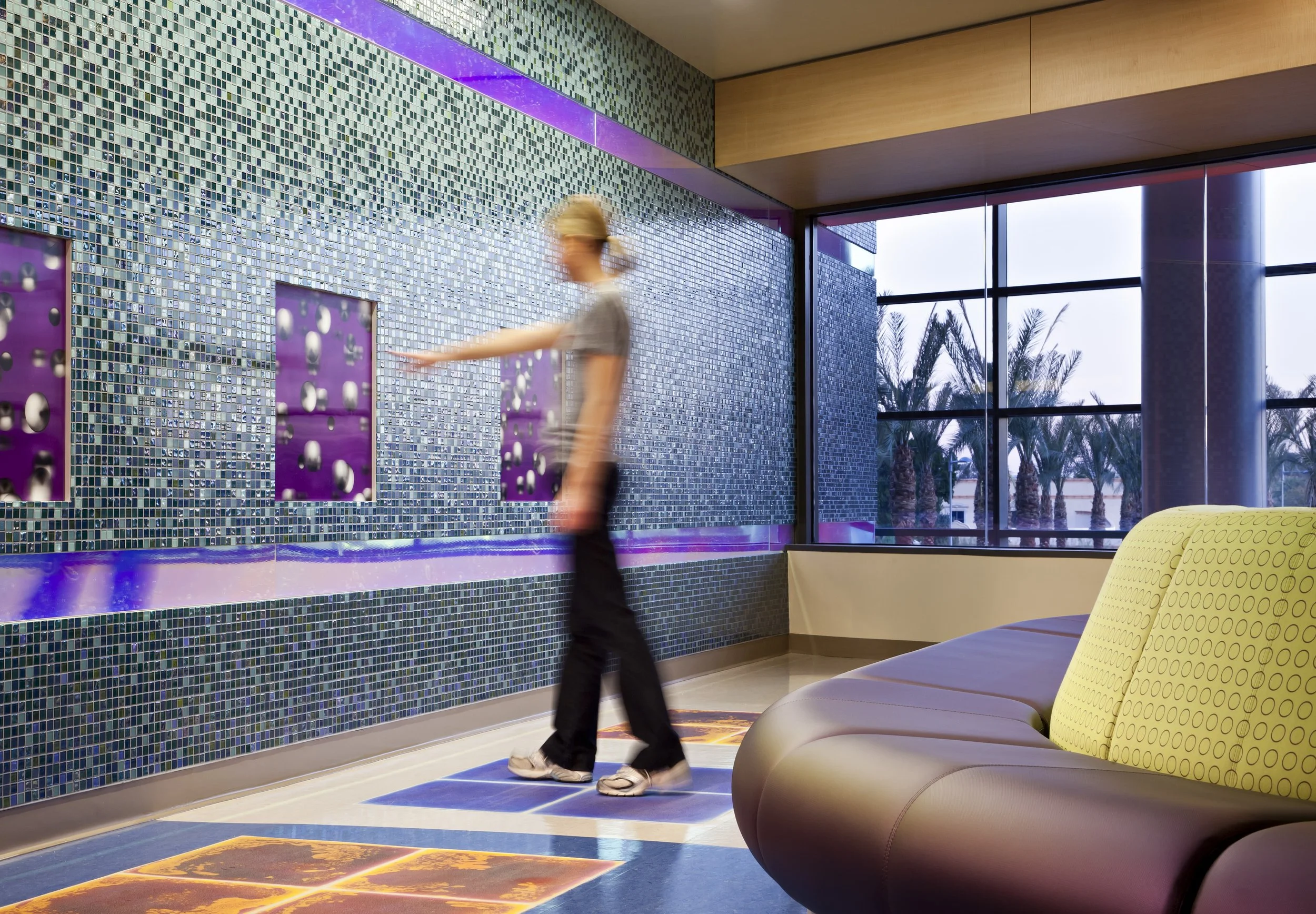
Biophilic design is not going anywhere. Nature-inspired environments, organic forms, calming palettes, and connections to the outdoors remain foundational in healthcare design because they support comfort, stress reduction, and overall wellbeing.
But in 2026, the conversation is evolving.
Healthcare clients still want spaces that feel restorative, but they are also asking for artwork that feels more elevated, curated, and sophisticated. As new hospitals, specialty clinics, and medical campuses begin to look more like hospitality, workplace, and residential environments, the artwork is being asked to do more than simply “calm” a space. It needs to support healing, reflect the architecture, tell a story, and feel intentional.
Here are six artwork trends shaping healthcare design in 2026.
1. “Healthcare Art” Doesn’t Want to Look Like Healthcare Art Anymore
For years, healthcare artwork followed a familiar formula: soft landscapes, blue abstracts, florals, water imagery, and gentle nature photography.
Those selections still have their place, but many clients are moving away from anything that feels too expected or institutional. They want artwork that supports wellness without looking overly clinical or generic.
This shift reflects a larger change in healthcare design. Facilities are being planned with more attention to experience, comfort, and identity. Artwork is no longer treated as a safe decorative layer added at the end. It is becoming part of how a space communicates quality, care, and personality.
In practice, this can look like contemporary abstract work, refined photography, mixed media, sculptural pieces, or curated collections that feel more like a gallery than a hospital corridor.
The goal is not to abandon evidence-based design. The goal is to make it feel more sophisticated.
2. Hospitality-Inspired Healthcare
Healthcare interiors are increasingly borrowing from hotels, resorts, and high-end public spaces.
Lobbies feel more like welcoming arrival experiences. Waiting areas are being designed with layered lighting, comfortable seating, and thoughtful materials. Specialty clinics are leaning into boutique hospitality cues that make the patient experience feel more personal and less intimidating.
Artwork plays a major role in that shift.
Instead of filling every blank wall with small framed prints, designers are using larger statement pieces, architectural installations, curated focal moments, and art programs that create a memorable first impression.
This is especially relevant in spaces where patient choice and brand perception matter, such as women’s health, oncology, outpatient centers, specialty clinics, and private healthcare environments.
When done well, hospitality-inspired healthcare does not feel overly luxurious or disconnected from care. It feels welcoming, polished, and considered.
3. Texture Is Replacing Flat Artwork
Flat artwork is no longer the only answer.
One of the strongest trends across healthcare interiors is the use of texture, dimension, and materiality. Designers are looking for artwork that adds depth to the environment, not just color.
This can include ceramic installations, layered acrylic, dimensional wall sculpture, textile-inspired pieces, carved wood, metalwork, mixed media, and custom commissions that interact with light and architecture.
Texture is especially useful in healthcare because it can create warmth without overwhelming the space. A dimensional piece can feel calm, refined, and engaging all at once.
It also gives designers a way to make high-impact areas feel more intentional. Feature walls, elevator lobbies, reception areas, family lounges, and waiting rooms can become moments of visual interest rather than simply places to pass through.
The question is shifting from “What image should go here?” to “What kind of experience should this wall create?”
4. Local Storytelling and Sense of Place
Healthcare facilities are becoming more connected to the communities they serve.
Rather than relying on generic artwork, clients are increasingly interested in local artists, regional landscapes, cultural references, and artwork that reflects the identity of the surrounding area.
This trend is especially powerful in healthcare because patients, families, and staff want to feel grounded. A hospital or clinic can be large, unfamiliar, and stressful. Artwork that reflects a recognizable sense of place can make the environment feel more human.
Sense of place can be interpreted in many ways. It might be a local artist commission, a color palette inspired by the region, abstract references to nearby landscapes, historical imagery, community storytelling, or materials that connect back to the surrounding environment.
The most successful healthcare art programs do not feel like they could belong anywhere. They feel specific, thoughtful, and rooted.
5. Quiet Luxury
Quiet luxury has made its way into healthcare design, but not in a flashy way.
In healthcare interiors, this trend is less about opulence and more about refinement. It favors restraint, craftsmanship, natural materials, elevated framing, softer palettes, and artwork that feels timeless rather than trendy.
For art programs, quiet luxury might look like oversized neutral abstracts, warm minimal compositions, hand-finished details, subtle texture, museum-style presentation, or commissioned pieces that feel elegant without demanding attention.
This approach works especially well in spaces where the architecture is already elevated. When a facility has beautiful finishes, thoughtful lighting, and high-end materials, the artwork needs to match that level of sophistication.
Quiet luxury also supports the emotional goals of healthcare design. It can make a space feel calm, confident, and cared for without feeling cold or sterile.
6. Residential Comfort
Healthcare environments are also becoming softer and more residential.
This does not mean making a hospital look like a house. It means borrowing the qualities that make residential spaces feel comfortable: warmth, familiarity, layered details, and a sense of being thoughtfully cared for.
Artwork can help create that feeling.
Gallery-style groupings, softer color palettes, collected-looking pieces, warm wood frames, textile-inspired works, and art that feels personal rather than prescribed can make healthcare spaces feel more approachable.
Residential comfort is especially important in areas where patients and families spend extended time, including oncology, behavioral health, pediatrics, women’s health, rehabilitation, senior living, and family waiting areas.
In these spaces, artwork is not just decoration. It helps reduce the emotional distance between the patient and the environment.
Looking Ahead
The future of healthcare art is not about choosing between beauty and evidence-based design. It is about bringing the two together.
Biophilic design will continue to play an important role, but clients are asking for more layered, more refined, and more meaningful art programs. They want spaces that feel calming without feeling generic. Sophisticated without feeling cold. Local without feeling themed. Comfortable without feeling casual.
In 2026, healthcare artwork is moving beyond the traditional healthcare aesthetic and becoming a more integrated part of the patient, visitor, and staff experience.
Because when artwork is selected with intention, it does more than fill a wall. It helps shape how people feel inside the space.